

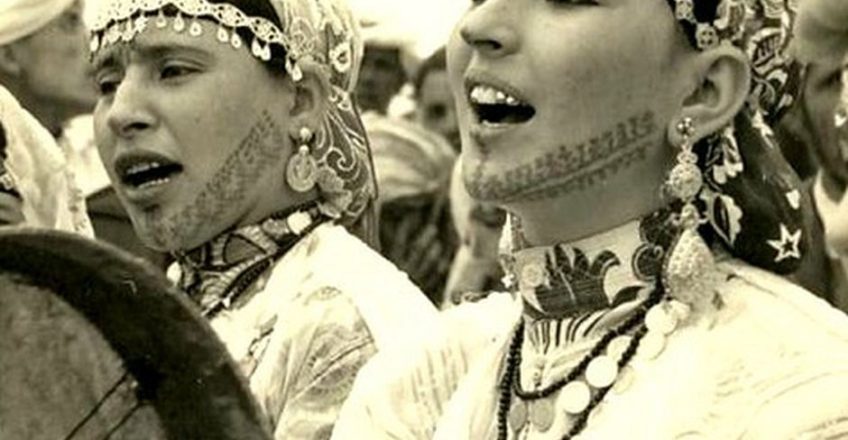
The Berber people of Morocco, widely known as the Amazigh or Imazighen, are Indigenous peoples of North Africa with a rich history, diverse languages, and cultural traditions that have shaped the country’s identity for centuries. Amazigh communities have their own regional histories, artistic expressions, oral traditions, and linguistic heritage, particularly across the Rif Mountains, the Atlas Mountains, and southern Morocco. Today, Amazigh identity remains an important part of modern Moroccan society, connecting historical heritage with contemporary life.
Although the term “Berber” is widely used in English-language books, historical research, and travel writing, many people prefer the name “Amazigh.” Understanding the difference between these terms provides a useful starting point for exploring Morocco’s Indigenous heritage and appreciating the diversity of its communities.
What Does the Word Amazigh Mean?
Amazigh is the singular form commonly used to describe an individual, while Imazighen is its plural form. The term is associated with Amazigh identity across North Africa, including Morocco, Algeria, Tunisia, Libya, and parts of the wider Saharan region. The feminine form Tamazight may be used in certain linguistic and cultural contexts, while Tamazight is also the name commonly used for the Amazigh language in Morocco’s constitutional framework.
The meaning and historical interpretation of the word “Amazigh” have been discussed in linguistic and cultural scholarship. Rather than relying on a simplified or disputed translation, it is more accurate to understand Amazigh as a central term of identity used by many communities across North Africa.
Amazigh identity encompasses more than language alone. It can include family history, regional belonging, cultural practices, artistic traditions, historical memory, and a sense of connection to North Africa. As with other cultural identities, individuals may express this heritage in different ways depending on their background, personal choices, and the languages they use in everyday life.
Why Are They Called Berbers?
The word “Berber” has been used for centuries in external accounts of North Africa. It is commonly connected to the Greek and Roman use of terms related to “barbarian,” and later to forms used in European and Arabic historical writing. The term has therefore developed through a long history of outside descriptions of North African peoples.
Today, “Berber” remains familiar to many English-speaking readers and frequently appears in historical references, travel guides, and academic publications. However, some people consider it an externally imposed label and prefer “Amazigh,” particularly when discussing identity, cultural recognition, and Indigenous heritage.
Neither term should be treated as a label that automatically determines an individual’s personal identity. When writing about contemporary communities, using “Amazigh” alongside “Berber” where useful can help readers understand both current terminology and the language they may encounter in older or international sources.
Are the Bearber People One Ethnic Group?
Amazigh identity includes many communities rather than one uniform tribe or population with identical traditions. Amazigh communities differ in language, regional history, local customs, music, clothing, architecture, and other cultural expressions. These differences reflect centuries of life across varied environments, from mountain valleys and agricultural plains to coastal areas, cities, and oasis settlements.
In Morocco, for example, Tarifit is associated with many communities in the Rif region, Central Atlas Tamazight with parts of the Middle Atlas and central Morocco, and Tashelhit with many communities in the Souss region, the Anti-Atlas, and surrounding areas. These are broad geographic associations, not rigid boundaries. Migration, urbanization, education, and family histories have created more varied patterns of language use throughout the country.
It is also important to distinguish Amazigh cultural identity from tribal affiliation. Historical tribal confederations and local community structures have played roles in different periods, but not every Amazigh person identifies through a tribe, and traditional social organization does not describe the lives of all Amazigh people today.
Where Do the Amazigh People Fit into Moroccan Identity?
Amazigh heritage is an integral part of Morocco’s national and cultural history. Moroccan identity has developed through the interaction of Amazigh, Arab, Saharan, African, Andalusian, Jewish, Mediterranean, and other influences over many centuries. These connections are not mutually exclusive: many Moroccans have layered family histories and cultural identities that cannot be reduced to a single category.
Amazigh communities contributed to Morocco’s political history, regional trade, agriculture, architecture, literature, music, and craftsmanship. Amazigh-led dynasties, including the Almoravids and Almohads, played major roles in the medieval history of Morocco and wider parts of North Africa and the Iberian Peninsula. At the same time, the country’s cultural development involved many other communities and historical forces.
Modern recognition of Amazigh identity has also become an important part of Morocco’s public life. Article 5 of the 2011 Constitution recognizes Tamazight as an official language alongside Arabic and establishes a framework for its integration into education and priority areas of public life. The Royal Institute of Amazigh Culture (IRCAM) supports research and the promotion of Amazigh language and culture.
You can consult Morocco’s 2011 Constitution for the legal framework and IRCAM for institutional resources on Amazigh cultural heritage.
Is Amazigh Culture Still Alive in Modern Morocco?
Yes. Amazigh culture is a living part of contemporary Morocco, not simply a remnant of the past. Amazigh languages are used in homes, communities, cultural activities, media, and educational contexts, while music, festivals, crafts, oral traditions, and artistic expression continue to evolve. The way people maintain and express their heritage differs by region, generation, and personal preference.
Many Amazigh people live in modern cities and participate in every area of contemporary society, including business, education, government, technology, and the arts. Others maintain close connections to rural communities, agriculture, craft production, or regional traditions. These experiences can overlap, and no single lifestyle represents all Amazigh people.
For travelers, learning about Amazigh identity offers a deeper understanding of Morocco’s cultural diversity. Visiting a local market, discovering regional crafts, learning from a knowledgeable guide, or exploring the history of an Atlas Mountain community can provide opportunities to understand how heritage is preserved and reinterpreted in everyday life.
Travelers interested in exploring these cultural connections can discover Morocco cultural tours with Culture Insider, with experiences designed around the country’s history, regional traditions, and cultural heritage.
The Amazigh people are Indigenous to North Africa, with communities across Morocco, Algeria, Tunisia, Libya, and parts of the wider Sahara and Sahel. In Morocco, Amazigh identity encompasses diverse regional communities with distinct languages, histories, and cultural practices.
What do Amazigh and Imazighen mean?
Amazigh is the singular form commonly used for an individual, while Imazighen refers to the people in the plural. The term Tamazight is widely used for the Amazigh language, although its precise meaning can vary according to linguistic and regional context.
The word “Berber” has a long history in European and international writing. It remains familiar to many readers and appears in historical literature, but some people prefer “Amazigh” because it reflects their own cultural identity. Individual preferences differ, so using the terminology a person or community prefers is a respectful approach.
Amazigh identity should not be understood as one uniform tribe or a single lifestyle. Communities differ in language, geography, family history, livelihoods, and customs. Some live in mountain villages or agricultural areas; others live in major cities, work in diverse professions, and maintain connections with Amazigh heritage through language, family, music, or cultural organizations.
The Origins and History of the Amazigh People in Morocco
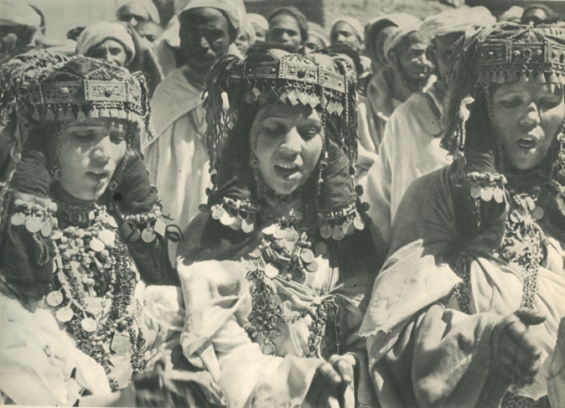
The history of the Amazigh people reaches deep into North Africa’s past. Indigenous populations inhabited the region long before the formation of modern Morocco, and their societies developed through changing political systems, trade networks, migration, and interaction with neighboring Mediterranean and African civilizations.
Ancient North Africa and Mediterranean connections
Ancient North Africa was home to diverse communities and political entities. Phoenician and Carthaginian settlements developed along parts of the Mediterranean coast, while Roman power later extended into areas of present-day Morocco. Indigenous North African populations interacted with these societies through commerce, warfare, diplomacy, and cultural exchange.
Because written records are uneven and ancient identities did not always correspond to modern ethnic categories, the precise origins of the Amazigh people cannot be reduced to one founding event or an exact date. Their history is better understood through the long development of Indigenous North African societies.
The Arab-Islamic expansion and Moroccan dynasties
Beginning in the seventh century, Arab-Muslim expansion transformed North Africa. Islam and Arabic spread through processes that unfolded over generations, while Amazigh communities adopted, adapted, and helped shape the region’s new religious and political landscape. Amazigh identity did not disappear during this period.
Amazigh communities played important roles in Moroccan political history. The Almoravid movement, which emerged from a Saharan religious and political context in the eleventh century, established a major dynasty. The Almohad movement later developed into another powerful dynasty, expanding across Morocco and other parts of North Africa and the Iberian Peninsula.
These dynasties were not simply expressions of a single, unchanging ethnic identity. They developed within complex religious, political, and regional settings, demonstrating how Amazigh communities helped shape the wider history of Morocco and the western Islamic world.
Colonial rule and modern cultural recognition
French and Spanish colonial rule in Morocco during the twentieth century affected language, administration, education, and political life. Amazigh communities experienced these changes differently depending on their region and circumstances.
In contemporary Morocco, Amazigh cultural recognition has become an important part of public life. The 2011 Constitution established Tamazight as an official language of the state, alongside Arabic, and described it as a common patrimony of all Moroccans. Article 5 provides the constitutional basis for its protection and development.
For further context, consult Article 5 of Morocco’s 2011 Constitution.
Where Do the Amazigh People Live in Morocco?
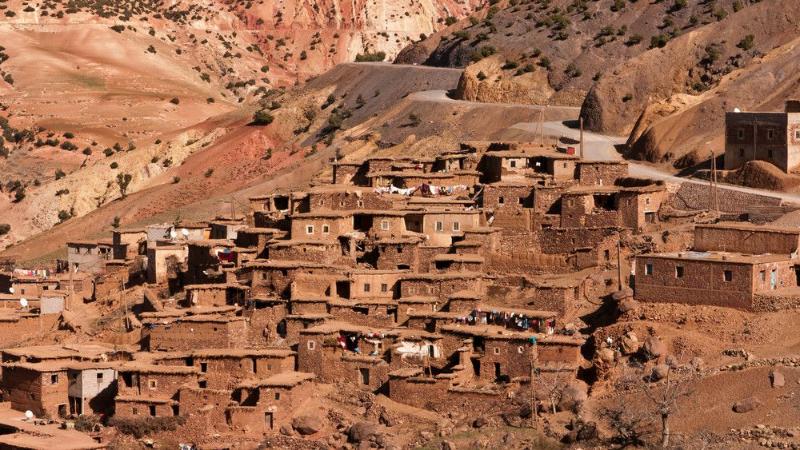
Amazigh communities live throughout Morocco, with particularly important regional concentrations in the north, central mountain ranges, southern Morocco, and southeastern oasis areas. Geography has influenced local languages, architecture, agriculture, crafts, and patterns of settlement.
The Rif Mountains in northern Morocco
The Rif Mountains are home to communities that include speakers of Tarifit, an important Amazigh language variety. Northern communities have distinctive linguistic and cultural histories shaped by the mountainous landscape, Mediterranean connections, agriculture, and regional trade.
The Middle Atlas and High Atlas Mountains
The Middle Atlas and High Atlas contain communities associated with Central Atlas Tamazight and other regional linguistic varieties. Local livelihoods have historically included agriculture, livestock raising, and trade, although contemporary life also involves education, tourism, business, public services, and migration.
Mountain architecture varies with local materials, climate, and settlement patterns. Some communities maintain traditional building techniques, while others use modern construction methods or combine old and new approaches.
The Souss region and Anti-Atlas
In southern Morocco, Tashelhit (also written Tachelhit or Tashelhit) is widely spoken across parts of the Souss region, the Anti-Atlas, and surrounding areas. Amazigh heritage here is associated with oral poetry, music, agricultural knowledge, markets, argan-growing landscapes, and distinctive regional crafts.
Southeastern Morocco and oasis communities
In southeastern Morocco, Amazigh cultural traditions are found in valleys, oasis settlements, and communities near historic trade routes. Fortified settlements and earthen architecture illustrate how people adapted to local climates and available materials.
The UNESCO World Heritage Centre’s account of Aït-Ben-Haddou describes a historic southern Moroccan ksar built using traditional earthen construction techniques.
These regional distinctions matter: there is no single Amazigh village, costume, accent, or set of customs that represents every Amazigh community in Morocco.
Who Are the Berber People of Morocco? History & Culture
Morocco Culture · By Culture Insider Team · Updated for...
Moroccan Hammam Experience: Relax, Rejuvenate, & Revitalize
Experience the Rejuvenating Moroccan Hammam Step into a world where...
Moroccan Dates – A Healthy Fruit with Delicious Flavor
Moroccan Dates – A Healthy Fruit with Delicious Flavor Moroccan...
Amazigh Languages in Morocco
Amazigh languages belong to the Afro-Asiatic language family. In Morocco, three major varieties commonly discussed are Tarifit, Central Atlas Tamazight, and Tashelhit. Their distribution is broadly regional, although language use is not confined to strict geographic boundaries and varies between individuals and families.
| Language variety | Broad region | Overview |
|---|---|---|
| Tarifit | Rif Mountains and northern Morocco | Amazigh language variety associated with many communities in the Rif. |
| Central Atlas Tamazight | Middle Atlas and parts of central Morocco | A major variety spoken in several central mountain communities. |
| Tashelhit (Tachelhit) | Souss, Anti-Atlas, and parts of southern Morocco | A major southern variety with rich oral, musical, and literary traditions. |
These labels are useful introductions rather than a complete account of Morocco’s linguistic diversity. Classification and naming conventions can differ between researchers, institutions, and speakers.
The Tifinagh writing system
Tifinagh is the writing system officially adopted for standardized Amazigh writing in Morocco. Its distinctive characters are visible in educational materials, cultural institutions, public signage, and other settings. The use of Tifinagh supports the visibility and transmission of Amazigh language in contemporary public life.
Amazigh languages have also been transmitted through oral traditions, including poetry, proverbs, songs, stories, and everyday conversation. These forms preserve knowledge, regional expressions, and collective memories across generations.
The Royal Institute of Amazigh Culture (IRCAM) is a useful institutional resource for further information on Amazigh language, writing, and cultural heritage.
Traditional Amazigh Culture and Everyday Life
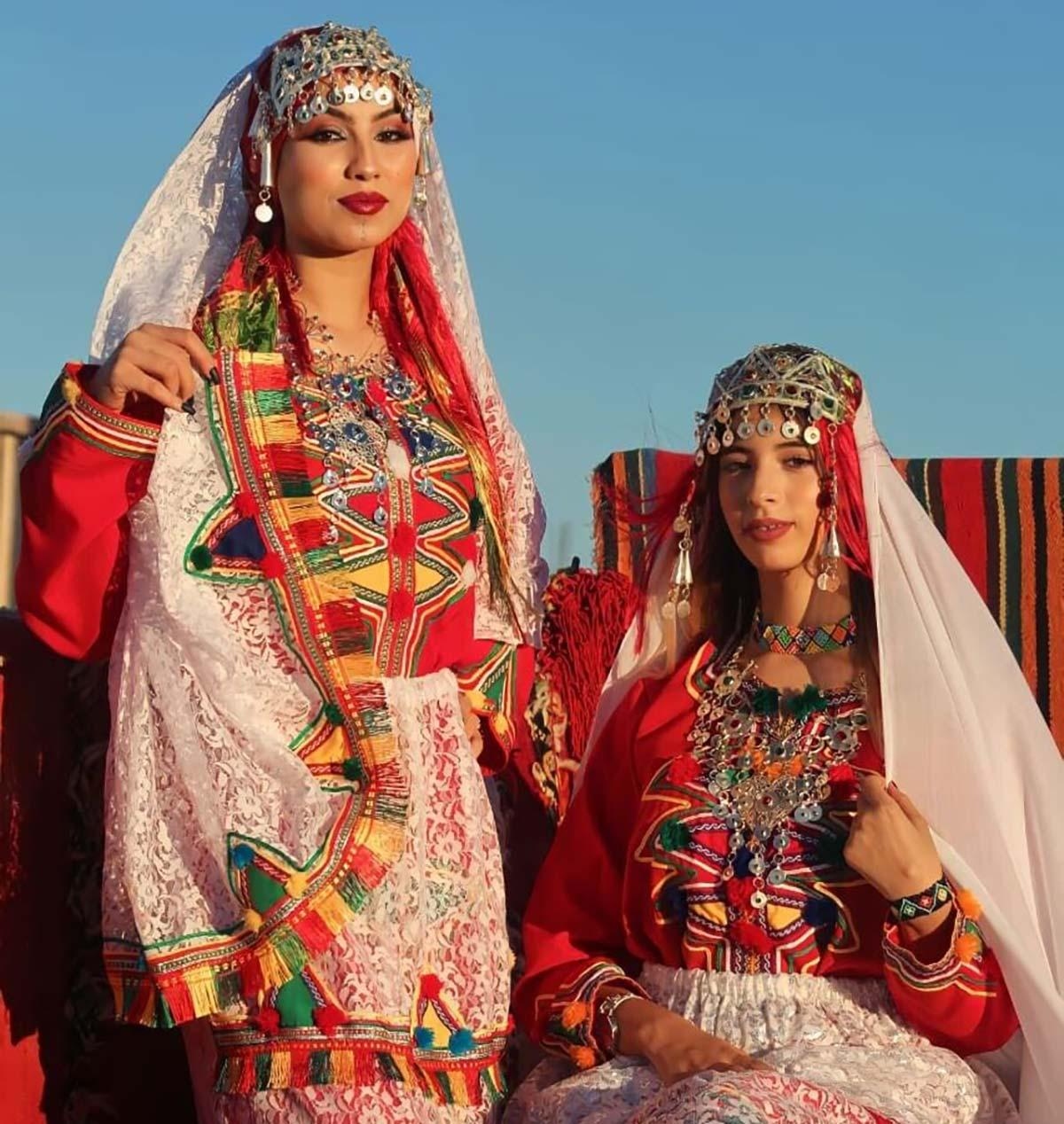
Amazigh culture expresses itself through family relationships, community networks, language, food, work, artistic expression, and local knowledge. These practices differ by region and continue to evolve rather than remaining fixed in the past.
Family, community, and hospitality
Family and community relationships are important in many Amazigh settings, as they are in many other Moroccan communities. Shared meals, visits, celebrations, and mutual support can help maintain social connections, although the way these practices work varies from household to household.
Mint tea is a familiar part of hospitality in Morocco. Preparing and sharing tea can create an opportunity for conversation, but it should not be treated as a ritual performed identically by every Amazigh family.
Architecture and local environments
Traditional architecture reflects the environment in which people live. In some southern and southeastern areas, earth, clay, stone, and wood have been used to build houses, granaries, and fortified settlements. In mountain regions, construction materials and layouts vary according to terrain, weather, and local resources.
Historic settlements such as Aït-Ben-Haddou demonstrate the relationship between building techniques, community organization, and the surrounding landscape. Today, traditional architecture exists alongside modern homes and infrastructure.
Work, agriculture, and changing livelihoods
Historically, Amazigh livelihoods have included farming, livestock raising, orchard cultivation, pastoralism, craft production, and trade. Regional crops and economic activities depend on rainfall, water access, soil, altitude, and local markets.
Modern Amazigh life is equally diverse. People work in cities and rural areas, pursue higher education, operate businesses, engage in tourism, and participate in national and international professional networks. Cultural continuity does not require communities to remain isolated from modern life.
Amazigh Traditions, Festivals and Celebrations
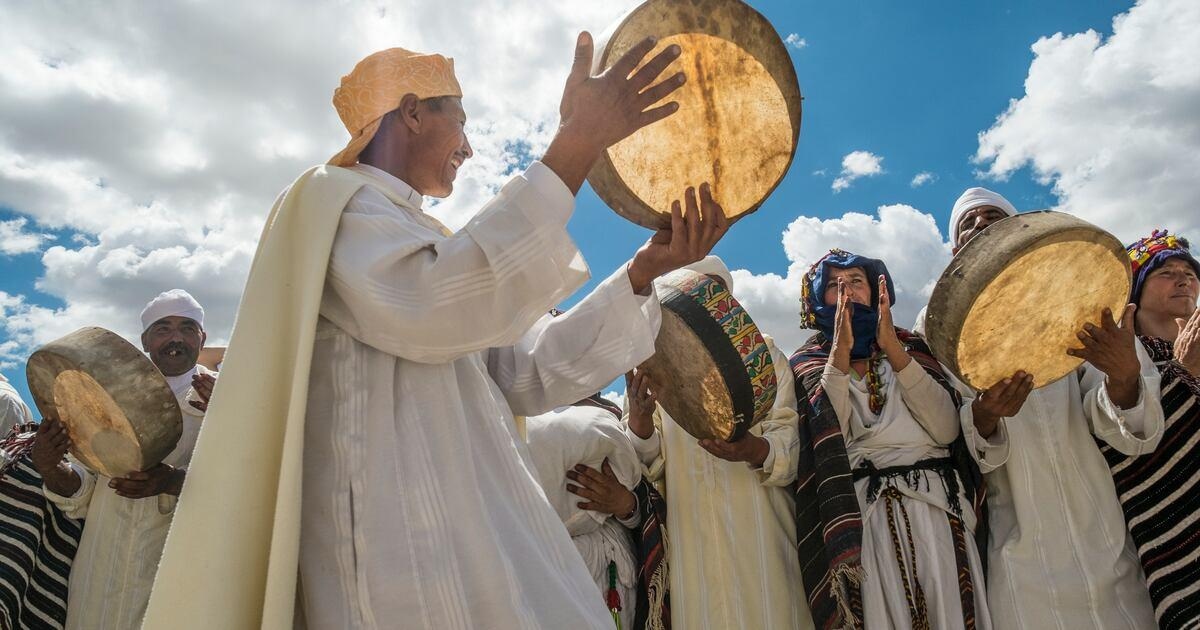
Amazigh celebrations express regional identity through music, dance, poetry, seasonal customs, and gatherings. Their forms and meanings vary according to community, family, and generation.
Yennayer: the Amazigh New Year
Yennayer marks the Amazigh New Year and is associated with seasonal traditions, agricultural calendars, food, and cultural identity. Celebrations can include family meals, traditional dishes, music, and community activities. Specific customs differ across North Africa, so there is no single menu or ceremony observed everywhere.
For many people, Yennayer is also an opportunity to celebrate Amazigh language and heritage and to pass cultural knowledge to younger generations.
Ahwach and Ahidous
Ahwach is associated with communal music and dance traditions in parts of southern Morocco, particularly areas linked to Tashelhit-speaking communities. Performances may feature coordinated movement, percussion, chanting, and poetic expression.
Ahidous is associated with communities in the Middle Atlas and neighboring regions. It commonly involves group singing and coordinated dancing, with participants forming lines or circles in some performances.
Although both traditions bring people together through music and movement, Ahwach and Ahidous are distinct cultural forms rather than interchangeable names for one dance. Their performance styles, musical features, and local meanings vary.
Oral storytelling and poetry also remain important ways of sharing knowledge, expressing humor, and remembering community histories. Some traditions continue through family gatherings, while others appear in festivals, cultural programs, and contemporary performances.
Amazigh Art, Clothing, Crafts and Symbols
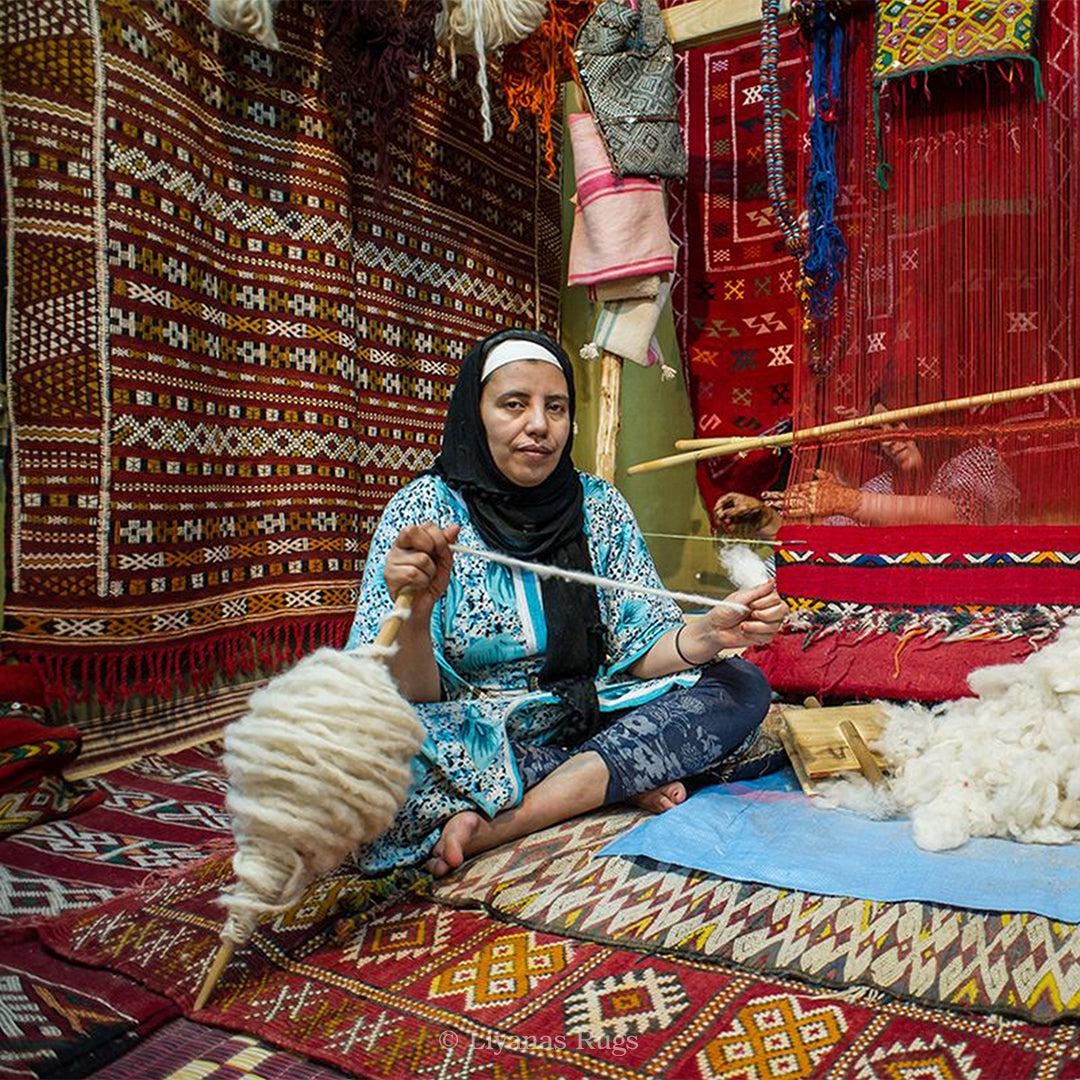
Amazigh artistic traditions include weaving, rugs, pottery, jewelry, embroidery, clothing, and decorative arts. Their appearance varies widely across Morocco, reflecting local materials, techniques, historical connections, and the creative choices of individual artisans.
Traditional weaving and rugs
Rug-making is an important craft in several Moroccan regions. Different weaving communities produce textiles with distinctive textures, color palettes, compositions, and techniques. Some pieces are made for household use, while others are produced for sale or commissioned for specific purposes.
Patterns may carry personal, regional, decorative, or cultural significance. However, individual motifs should not automatically be assigned one universal meaning: interpretations can differ between communities and makers.
Jewelry, pottery, and decorative arts
Traditional jewelry, metalwork, pottery, embroidery, and other crafts showcase specialized knowledge and skilled craftsmanship. Materials and styles differ by region, and individual pieces may reflect family traditions, changing fashions, or contemporary design.
Artisans and craftspeople help sustain this heritage by transmitting techniques, developing new products, and adapting their work to changing markets. Travelers can contribute by buying directly from makers when possible, asking about the production process, and respecting the time and expertise involved.
Amazigh Food and Hospitality in Morocco
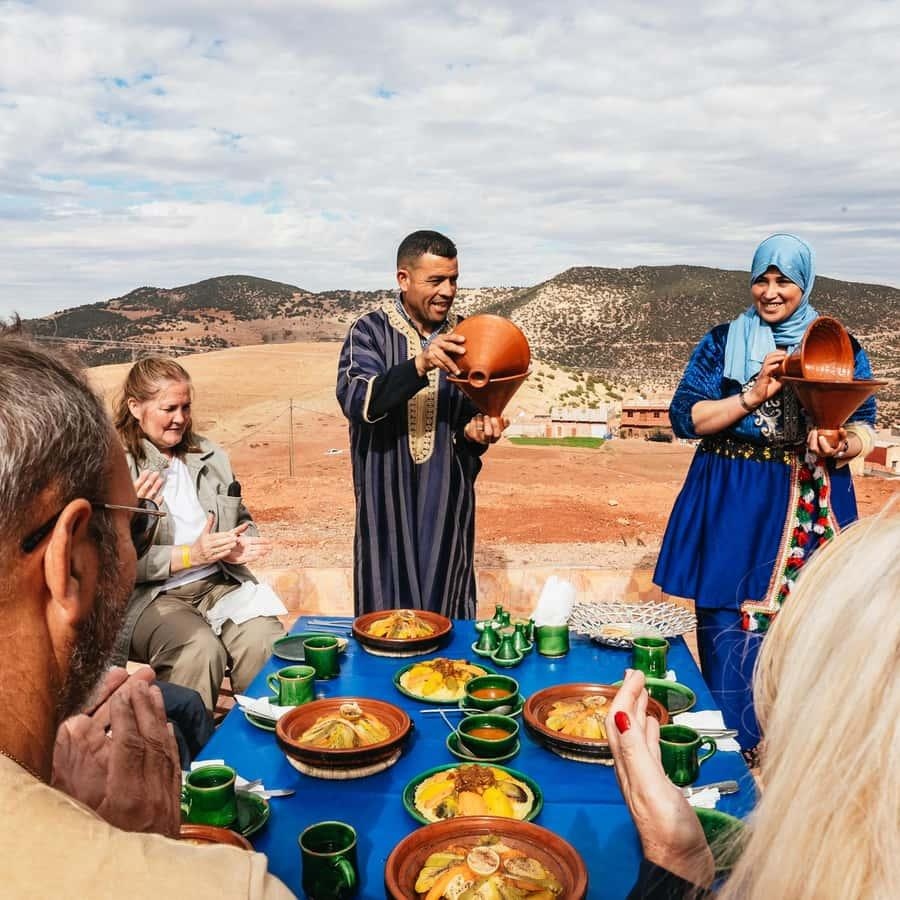
Food offers another way to understand the relationship between Amazigh heritage, local environments, and daily life. Regional cuisines draw on available ingredients, agricultural practices, trade, family recipes, and the wider culinary history of Morocco.
Bread, couscous, and shared meals
Bread is important in many Moroccan households, and traditional preparation methods vary between regions. Couscous is also a significant part of Moroccan food culture, prepared with different grains, vegetables, legumes, and meat according to the recipe and occasion.
Morocco’s couscous traditions were recognized by UNESCO in 2020 through a multinational inscription concerning the knowledge, know-how, and practices associated with its production and consumption. This recognition reflects a shared regional heritage rather than exclusive ownership by one community.
Tagines, local produce, and mint tea
Tagines, vegetable dishes, seasonal produce, olives, dates, and other ingredients feature in different regional food traditions. In areas where agriculture depends on mountain rainfall or oasis irrigation, local food practices closely connect to water availability, growing conditions, and seasonal harvests.
Mint tea is widely associated with Moroccan hospitality. When invited to share a meal, visitors can learn about a family’s food traditions by asking respectful questions about ingredients, preparation, and the occasions on which a dish is served.
No single dish represents all Amazigh communities. Moroccan cuisine has developed through centuries of interaction among Indigenous North African, Arab, African, Mediterranean, Jewish, and other cultural influences.
For travelers who want to explore these culinary traditions more deeply, Morocco culinary tours offer an opportunity to discover regional flavors, traditional cooking methods, and the cultural stories behind Moroccan food.
How the Amazigh People Have Influenced Modern Moroccan Culture
Amazigh heritage contributes to Morocco’s languages, regional identities, architecture, agricultural knowledge, music, craftsmanship, and food traditions. Its influence can be seen in both historic cultural practices and contemporary expressions of Moroccan identity.
Language and public recognition
The official recognition of Tamazight in the 2011 Constitution was an important development in Morocco’s contemporary linguistic and cultural framework. Educational initiatives, cultural institutions, publications, broadcasting, and public uses of Tifinagh contribute to the visibility of Amazigh language.
Language revitalization is an ongoing process, and the experiences of speakers differ according to region, generation, education, and personal circumstances. Not every Moroccan with Amazigh ancestry speaks an Amazigh language, and language use alone does not define the entirety of a person’s identity.
A shared and diverse Moroccan identity
Moroccan culture has developed through interactions among Amazigh, Arab, Saharan, African, Mediterranean, Jewish, Andalusian, and other historical influences. These traditions should not be treated as isolated or mutually exclusive categories.
Recognizing Amazigh contributions provides a fuller understanding of Morocco’s history. It also highlights how cultural heritage can remain meaningful while people participate in contemporary education, employment, technology, arts, and public life.
How to Experience Amazigh Culture During a Trip to Morocco
Travelers interested in Amazigh heritage can explore it through regional markets, local crafts, historic settlements, traditional music, food, and conversations with knowledgeable local guides. The most meaningful experiences are those that help visitors understand local context rather than reducing communities to tourist attractions.
Explore local markets and traditional crafts
Markets offer opportunities to discover regional produce, textiles, pottery, jewelry, and other handmade goods. Ask vendors about their products and techniques, and remember that not every item sold as traditional has been produced locally or by hand.
Visit mountain communities and historic settlements
Travel through the Atlas Mountains or parts of southern Morocco to learn how geography influences architecture, agriculture, and daily life. Historic places such as Aït-Ben-Haddou can help visitors understand traditional earthen architecture and settlement patterns.
Choose visits that respect residents’ privacy and avoid treating homes or community spaces as open-access tourist attractions. A local guide can provide context about regional history and help arrange appropriate visits.
Learn through food, music, and conversation
When opportunities arise, join a locally organized cooking activity, attend a cultural performance, or learn about a craft directly from an artisan. Experiences should be arranged with the agreement of the people involved, with fair compensation where services or demonstrations are provided.
Always ask permission before photographing people, homes, or private activities. Follow local guidance on dress, behavior, and access to religious or community spaces. Listening carefully and asking respectful questions is often more valuable than expecting people to perform a tradition on demand.
For a more structured introduction to Morocco’s regional heritage, explore Culture Insider’s Morocco cultural tours. A thoughtfully planned itinerary can combine historical sites, regional landscapes, local crafts, and cultural learning while helping travelers connect with knowledgeable guides and local providers.
Frequently Asked Questions About the Berber People of Morocco
Who are the Berber people of Morocco?
The Berber people, widely known as the Amazigh people, are Indigenous to North Africa. In Morocco, they represent diverse communities with distinct regional languages, histories, and cultural traditions.
Are Berber and Amazigh the same?
Both terms commonly refer to Indigenous peoples of North Africa. Amazigh is preferred by many people as a self-designation, while Berber remains common in historical and international writing. Personal preferences vary.
Where do the Amazigh people live in Morocco?
Amazigh communities live across Morocco, particularly in the Rif Mountains, Middle Atlas, High Atlas, Souss region, Anti-Atlas, and southeastern oasis areas. Many also live in major cities and other parts of the country.
What language do Berber people speak in Morocco?
Major Amazigh language varieties in Morocco include Tarifit in the north, Central Atlas Tamazight in parts of central Morocco, and Tashelhit in the south. Language use varies between individuals and communities.
Are the Amazigh people Indigenous to Morocco?
Yes. Amazigh peoples are Indigenous to North Africa, and their communities have deep historical roots in the territory that is now Morocco.
What are some important Amazigh traditions?
Traditions vary by region but can include Yennayer celebrations, oral poetry, music, communal dance, weaving, pottery, regional cuisine, and the transmission of local knowledge between generations.
Is Amazigh culture still alive in modern Morocco?
Yes. Amazigh culture continues through language, family and community life, artistic practices, education, cultural institutions, festivals, and contemporary creative work. It is part of modern Moroccan society.
Can travelers experience Amazigh culture during a Morocco tour?
Yes. Travelers can explore regional markets, historic settlements, local crafts, music, and food, ideally with knowledgeable guides and community-led providers who support respectful cultural exchange.
Discover Morocco’s Cultural Heritage
The Berber people of Morocco, or Amazigh people, have contributed profoundly to North African history and Moroccan cultural identity. Their heritage encompasses ancient historical roots, regional languages, mountain and oasis communities, traditional crafts, music, food, and evolving cultural practices.
Understanding Amazigh culture means recognizing both its historical depth and its diversity today. No single region, language, or tradition tells the whole story, and respectful cultural exploration begins with listening to the people who carry this heritage forward.
If you would like to explore these traditions in greater depth, discover cultural tours in Morocco with Culture Insider and learn more about the country’s regional histories, communities, and living cultural heritage.